
Commentary January 4, 2022

Why The Republican Party Isn’t Concerned With Popularity
Daniel A. Cox

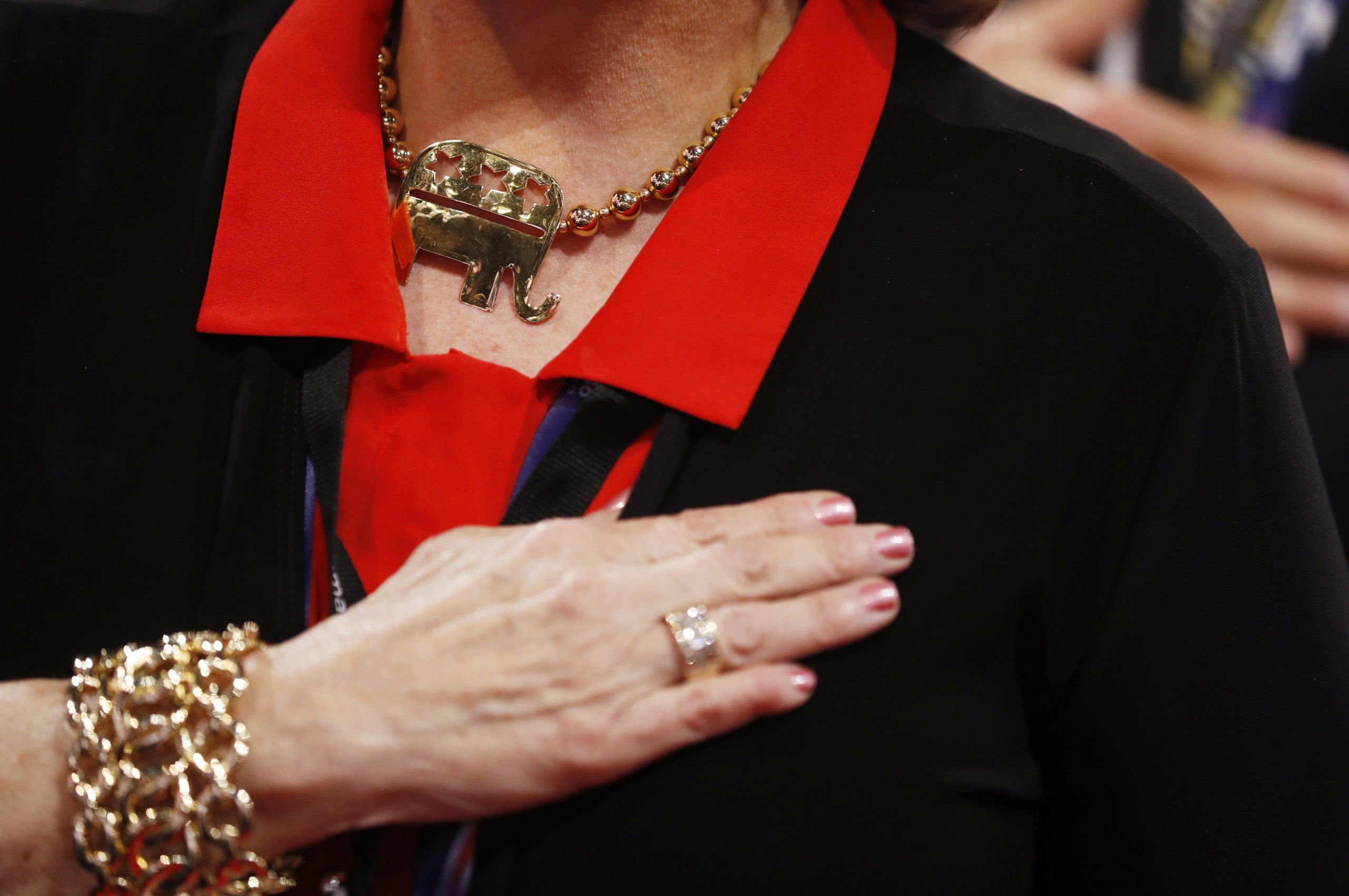
The upper torso of a white woman with her hand crossed over her heart. She is wearing a black jacket and red collared shirt. Around her neck is a large gold necklace of the Republican Party elephant.

FiveThirtyEight

After Mitt Romney lost the 2012 presidential election, the Republican National Committee published what became known as the “GOP autopsy report,” an effort to identify and address the party’s ongoing political weaknesses. But eight years later, after losing another close race, the GOP appears wholly uninterested in reviewing or reforming its agenda. In fact, despite capturing the presidency, the Democratic Party has been far more interested in developing an attractive issue agenda. “There is only one political party that is terrified of losing an election because it looks too extreme,” said Seth Masket, a FiveThirtyEight contributor and political scientist at the University of Denver. “There’s a huge party asymmetry.”

But despite the fact that the GOP is quite unpopular and that much of its current agenda — such as overturning the Affordable Care Act or advancing restrictive immigration policies — does not appeal to a majority of voters, the party is in an enviable position heading into the 2022 midterm elections and beyond. What is to make of this glaring disconnect?

Continue reading on FiveThirtyEight

Survey Reports

Daniel A. Cox, Jae Grace, Avery Shields
April 27, 2026

Strangers Next Door: The Decline of Neighborhood Socializing and the Class Divide in Belonging

Acknowledgment The American Enterprise Institute’s Survey Center on American Life is grateful to the John S. and James L. Knight Foundation for its generous support of this research. As Americans spend more of their time online, the neighborhood—once a primary physical location for real-world socialization—is playing less of a central role than ever before. Since

Daniel A. Cox, Kelsey Eyre Hammond
November 20, 2025

Individuality and Moral Behavior: A Generational Divide in Moral Judgments and Self-Expression

Younger and older Americans increasingly disagree on the morality of certain behaviors, reflecting deep shifts in views about individuality, self-expression, and the role of community and faith.

Daniel A. Cox
July 2, 2025

America’s Cultural Crossroads: Enduring Discontent, Rising Disconnection, and an Uncertain Future

A new survey from the Survey Center on American Life shows Americans are changing course on major cultural issues—from immigration and gay rights to gender roles and public trust.

Daniel A. Cox, Kelsey Eyre Hammond
January 29, 2025

Romantic Recession: How Politics, Pessimism, and Anxiety Shape American Courtship

A new report by the Survey Center on American life finds that safety concerns and declining trust are reshaping modern dating, leaving many singles feeling pessimistic about their prospects. Sharp gender divides in attitudes toward dating apps, trust, and relationships reveal how these challenges are redefining the search for connection.