
Newsletter September 8, 2022
The Coming Evangelical Christian Decline

Despite Recent Political Wins, Evangelical Christianity is on a Downswing
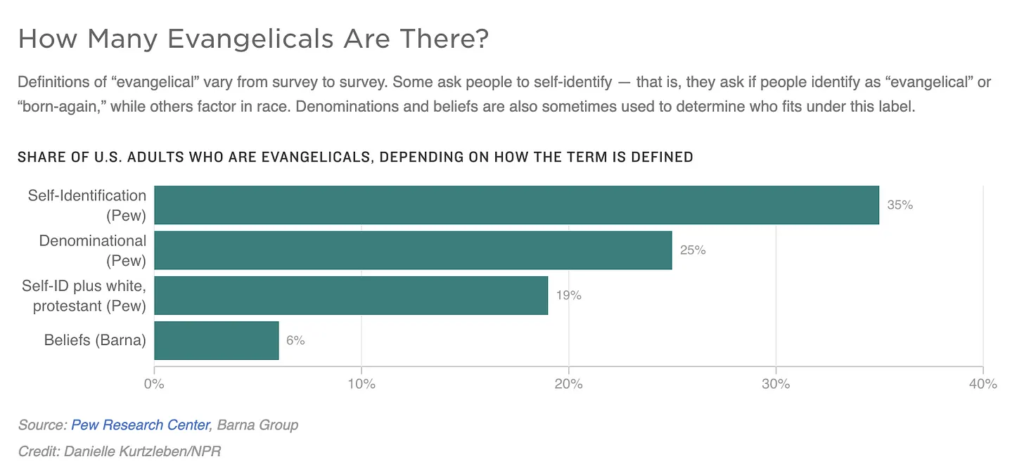
There’s no official tally, but the best estimates suggest that evangelical Christians make up roughly one in three Americans. They are politically active and vocal about the state of American culture. But there are fewer of them than there once were. Polls have found that the number of Americans identifying as evangelical Christians is dropping rapidly. And it’s not just the polls. The Southern Baptist Convention, the largest evangelical Protestant group in the country, has lost more than 2 million members over the last decade and a half.
A Question of Definition
But it’s not quite that straightforward. This count is based on a very broad definition that includes practically any self-identified Christian—Catholics, Orthodox Christians, members of the LDS Church, and other Christian denominations—who also claim to be evangelical or born-again. As NPR reporter Danielle Kurtzleben points out in a past report more exclusive definitions yield much smaller estimates.
Survey Reports




In the news

April 12, 2026
Is Masculinity in Crisis? These TV Shows Suggest Yes

April 1, 2026
Boys are Pulling Away. Mentorship Can Bring Them Back

March 31, 2026
The Real Religious ‘Renewal’ Happening in Gen Z
March 21, 2026