

Generational Split on Success
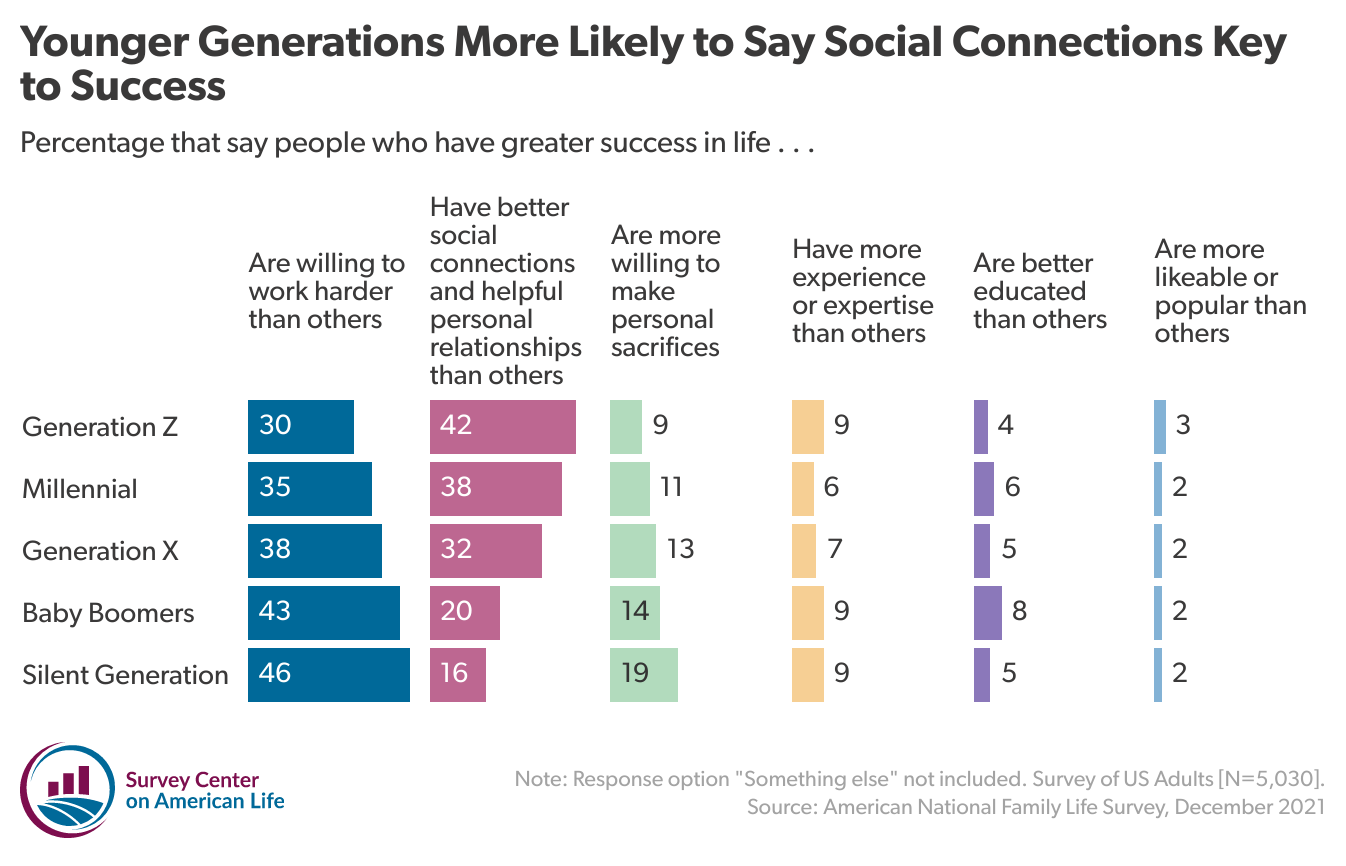
Is the illusion of meritocracy broken? A new study finds generational divides in views about what matters most for success. Older generations are far more likely to say work ethic plays a critical role in achieving success in life, while younger Americans are less likely to see it that way. Close to half of Americans who belong to the Silent Generation say work ethic is the most important factor in being successful. Gen Z and Millennials seem to have a growing disillusionment with the efficacy of hard work alone. Less than a third (30 percent) of Gen Z and 35 percent of Millennials say work ethic is the key to success. Instead, 42 percent of Gen Z and 38 percent of Millennials believe social connections and personal relationships are the most important factor in achieving success. And this shift in perspective isn’t unwarranted. They may be on to something: recent analysis shows that social connections in the office are just as if not more crucial to ladder-climbing than good old-fashioned hard work.
Generation Uncoupled

Generation Uncoupled: America's New Gender Divide and the Crisis of Human Connection
Buy NowSurvey Reports