
Born This Way
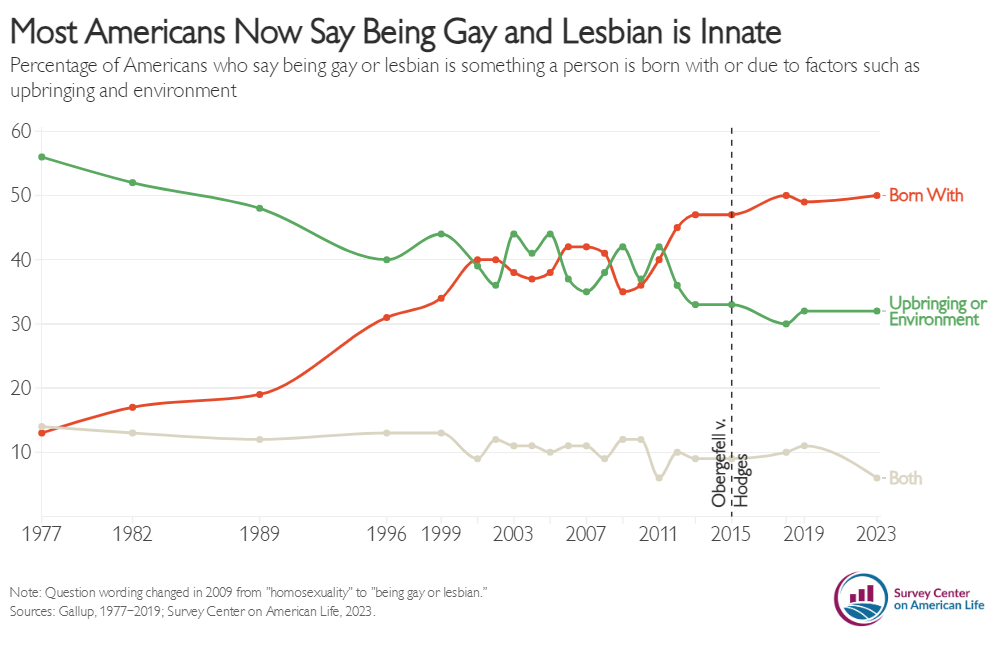
Long before Americans debated the issue of same-sex marriage, Gallup probed public understanding about the nature and origins of homosexuality. In 1977, more than half (56 percent) reported that homosexuality could be attributed to environmental factors or to upbringing; a scant 13 percent viewed being gay or lesbian as something people are born with. Over the ensuing decades, more Americans came to believe it was an inherent human trait, or “something that people were born with,” in the wording of early poll questions. By the early 2010s, more Americans said being gay and lesbian was inherent rather than an artifact of upbringing, but, even as support for same-sex marriage continues to rise, fundamental disagreements remain. In 2023, we find that half of Americans report that being gay and lesbian is something people are born with and roughly three in ten (32 percent) attribute sexual differences to upbringing or environment.
Generation Uncoupled

Generation Uncoupled: America's New Gender Divide and the Crisis of Human Connection
Buy NowSurvey Reports