

Young Women Are the Most Likely to Believe that Men Are at the Root of Their Problems
Young women are unique in their perceptions of gender discrimination in American society. More than two-thirds of young women believe that women face “a lot” of discrimination in American society. Fewer—though still a majority—of young men and older women share this view.
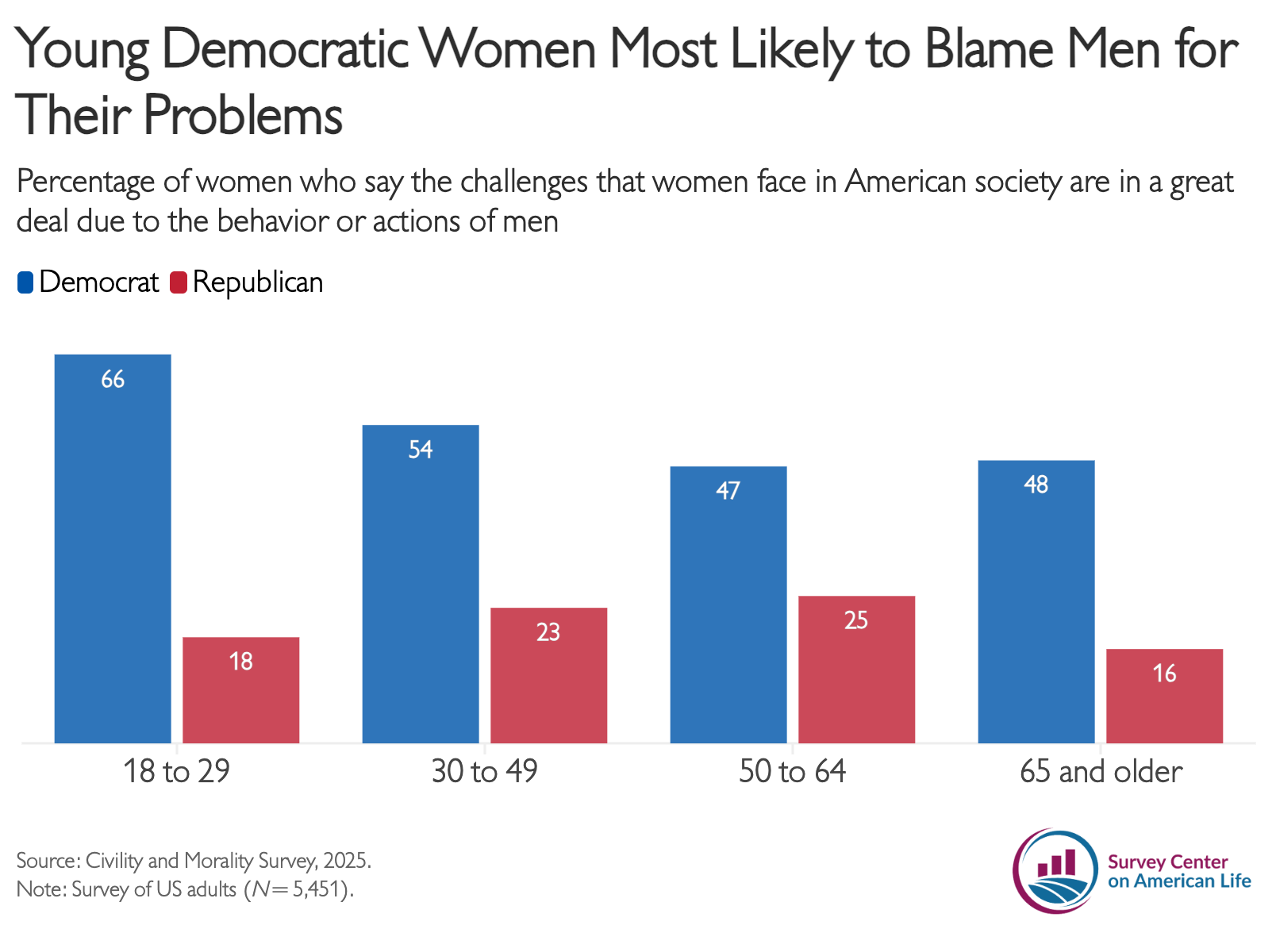
There is a sharp political divide as well. Democratic women are far more likely than Republican women to believe women face considerable prejudice in the United States. But it is not only in the existence of discrimination that Democratic and Republican women are at odds. Democratic women are far more likely than Republican women to say that men are responsible for many of the problems women have in American society.
The gap is especially pronounced among young women. Sixty-six percent of Democratic young women believe that the challenges women face in Americans society are due in great part to the behavior or actions of men. Only 18 percent of Republican young women agree.
Do men see things the same way? When men were asked whether women were to blame for the troubles men faced, only 16 percent agreed. Republican young men are more likely than Democratic young men to blame women for the challenges that men face, but only 26 percent do.
Generation Uncoupled

Generation Uncoupled: America's New Gender Divide and the Crisis of Human Connection
Buy NowSurvey Reports