
Younger Americans Report Feeling Relief When Social Plans Are Cancelled
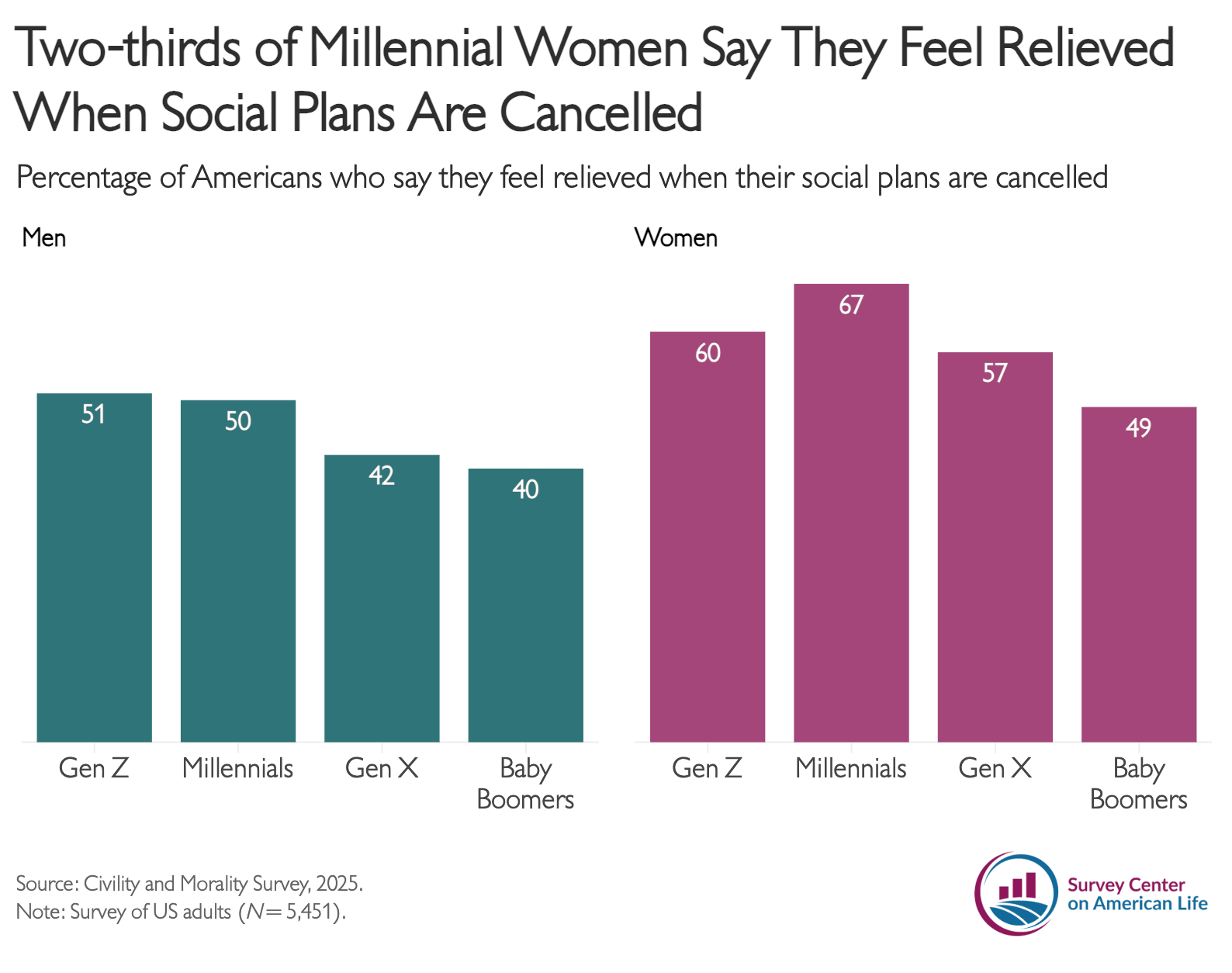
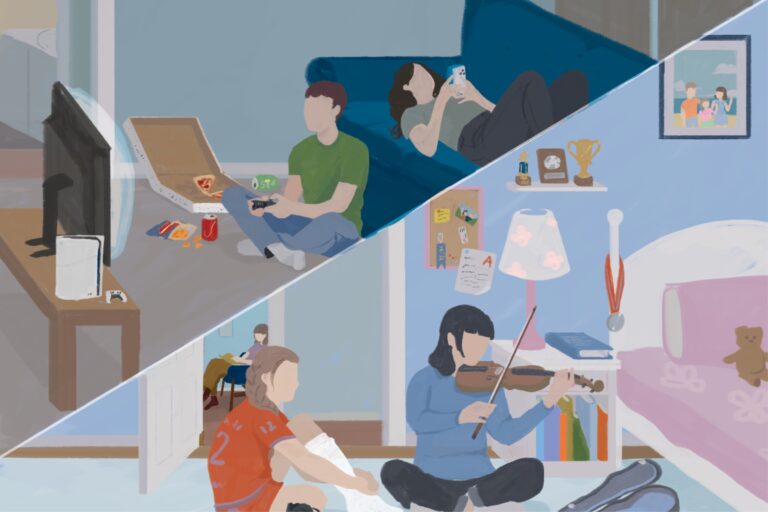
Americans today are spending less time with their peers and are less active in their communities. The Friday night out, once a cornerstone of young adults’ social lives, has experienced a rapid participation decline. Many young adults are choosing to stay in. And there are few signs they are regretting the decision. A majority of Gen Zers (55 percent) and Millennials (59 percent) say they feel a sense of relief when their social plans are cancelled. This is less true for Gen X and Baby Boomers.
Women report feeling relieved about cancelled plans at higher rates than men across all generations. The gap is widest among Millennials: two-thirds of women report feeling relief compared to just half of men. Still, the generational divide holds for both sexes. About half of Gen Z and Millennial men report feeling relief when plans are cancelled, compared to roughly 4 in 10 Gen X and Baby Boomer men.
Generation Uncoupled

Generation Uncoupled: America's New Gender Divide and the Crisis of Human Connection
Buy NowSurvey Reports